The safety page 62% of pest control websites don't have, before and after
62% of the 155 independent pest control websites we scanned say nothing about how treatment affects children or pets. Here is the page that answers it: the products used, when the family can go back in, and who does the work.
- Only 38% of 155 independent pest control company websites say how treatment affects children or pets (Clikiti Research, October 2026).
- Most of the sites that do pass use one reassurance line. A full safety page names the products, says when children and pets can go back in, and shows who is licensed to apply them (12% of sites show a licence number).
- It is a content job built from paperwork the company already keeps: product labels, service tickets and the licence certificate.
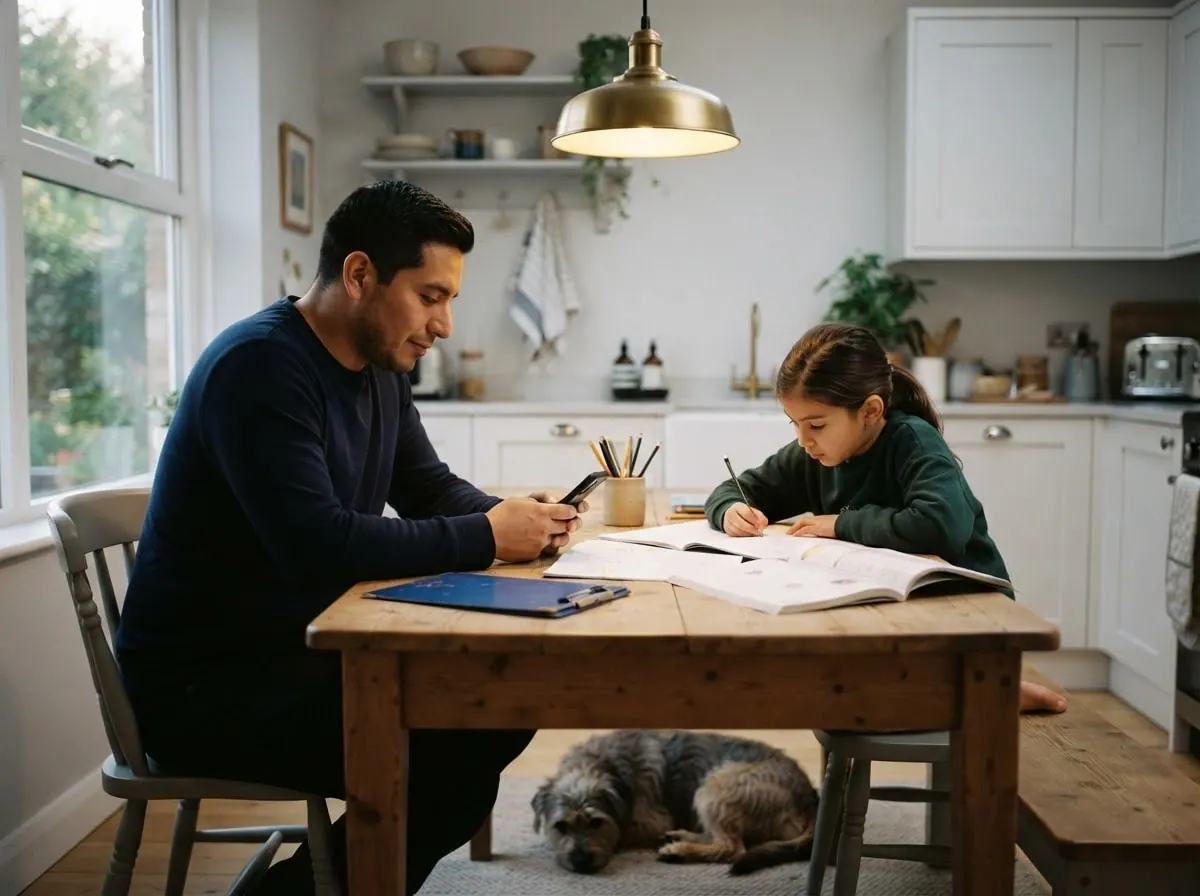
The question a parent or a dog owner asks a pest control company is rarely about the pests. It is about the visit: what will you use in my home, and when can the children and the dog go back in? This playbook specifies the page that answers it, before and after.
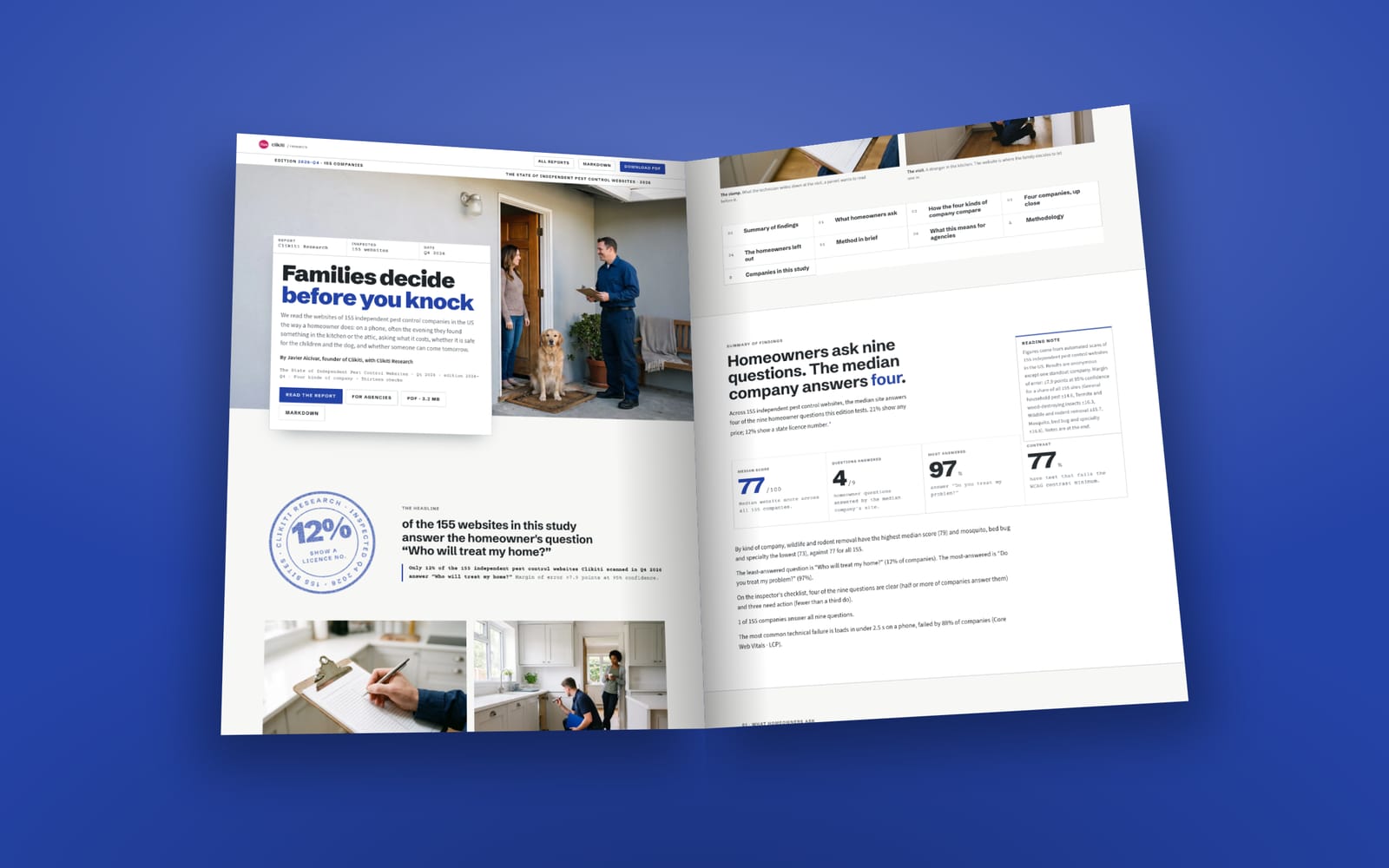
In The State of Independent Pest Control Websites 2026, Clikiti Research read the websites of 155 independent pest control companies against nine questions homeowners ask. Only 38% say anything about how treatment affects children or pets. The other 62% leave the question for the phone call.
of the 155 websites we scanned answer “Is it safe for my kids and my dog?” (says how treatment affects children and pets).
What counts as a pass?#
The scan reads the home page and the service, pests, pricing, guarantee and about pages it links to. A site passes when a sentence connects children or pets with the treatment: safe, harmless, non-toxic, pet-friendly, or when they can return or re-enter. Customer reviews don't count, and neither do sentences about the pests themselves.
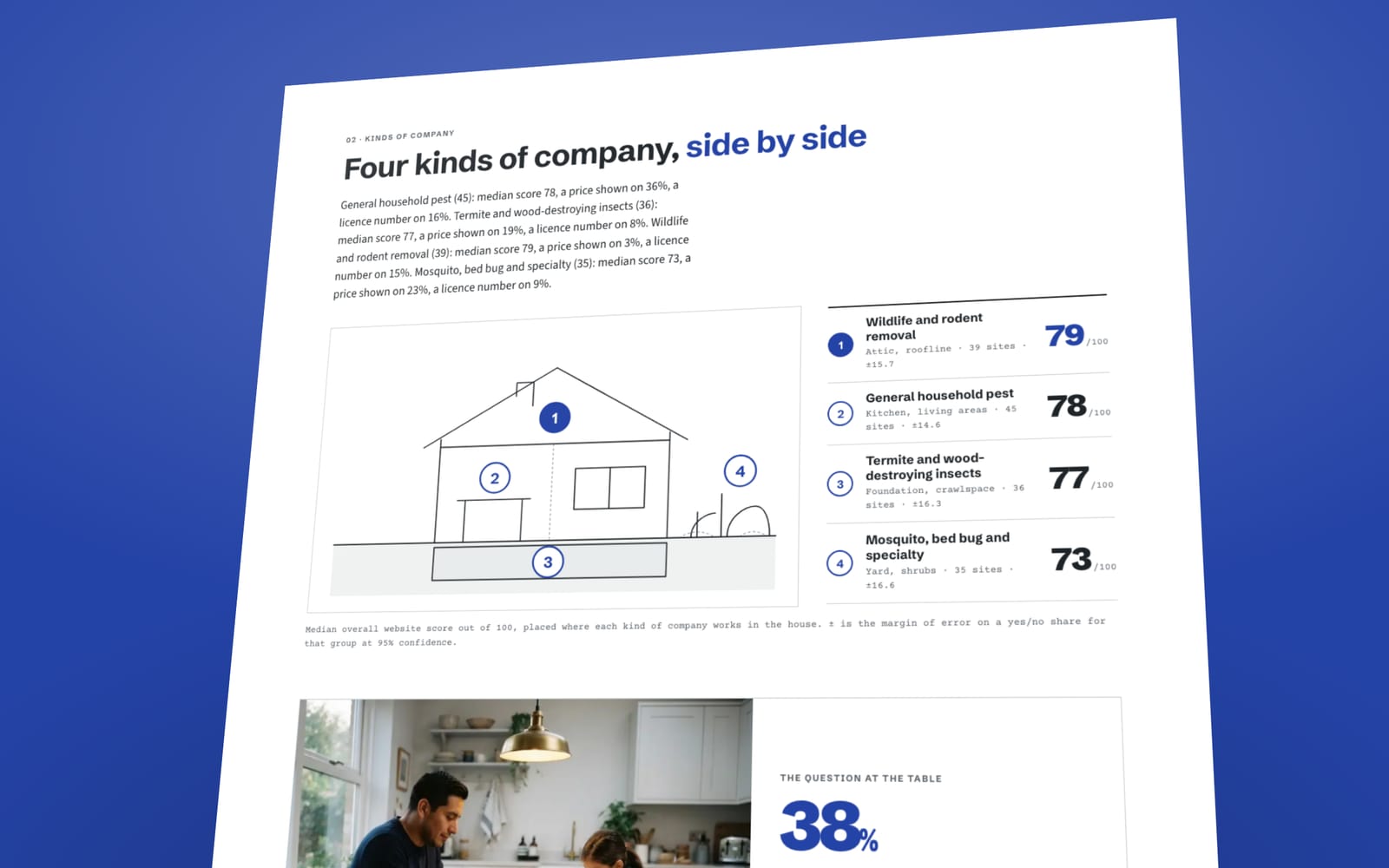
The bar is low on purpose, and still most sites miss it. By kind of company:
| Kind of company | Sites | Says how treatment affects children or pets |
|---|---|---|
| Mosquito, bed bug and specialty | 35 | 51% |
| General household pest | 45 | 42% |
| Termite and wood-destroying insects | 36 | 36% |
| Wildlife and rodent removal | 39 | 23% |
Before: what the page looks like now#
On 62% of the sites there is no page and no line. On most of the rest, the answer is one reassurance in a features strip or an FAQ: safe for children and pets, or pet-friendly. Reading the evidence, only a couple of sites say when the family can go back into a treated room.
One line passes the scan, and it is better than nothing. But it asks a parent to take the company's word for it, and it gives them nothing to check. The page below replaces that line with the answers a technician gives at the door.
After: the page, section by section#
Call it "Safety for children and pets" and give it its own address. Each section below has its copy written as it would read on the finished page. The company's own products and practices replace the details.
1. The answer, first
Safe for your family, and you'll know exactly why. Every product we use in homes is listed on this page, with what it's for and when children and pets can go back into a treated area. Your technician walks you through it before starting, and writes it on your service ticket before leaving.
2. What we use, by name
This is the section almost no site has. A table, one row per product the company uses in homes:
- the product's name as it appears on the label;
- its EPA registration number, which a homeowner can look up;
- what it's used for and where it goes: inside along baseboards, in bait stations, or around the outside of the house;
- the label's instruction on when people and pets can return to the treated area.
Take every row from the product labels the company already keeps. Don't paraphrase the re-entry instruction; quote the label. Where an answer depends on the product used that day, say so.
What we use in your home. These are the products our technicians carry. We don't use anything that isn't on this list. Each one is registered with the EPA, and you can look it up by its registration number.
3. When the family can go back in
The heart of the page. Write it per kind of treatment, since that is how a homeowner thinks of the visit. Use the times from the labels in the table.
After an inside treatment, keep children and pets out of the treated rooms until the product has dried, as the label directs. Your technician will tell you how long that is for the product used at your visit.
After an outside treatment, keep children and pets off treated areas of the lawn and beds until they're dry. We'll leave a note on your door with the time we finished.
Bait stations go where children and pets can't reach them. We'll show you where each one is.
4. Before the visit
Before we arrive. Put pet food and water bowls and children's toys away from the areas we'll treat. Tell us when you book if there's a baby, someone pregnant, a pet bird, a reptile or a fish tank in the home, so we can plan the treatment around them.
5. Who does the work
Only 12% of the sites show a state licence number, so this section answers a second question most competitors leave open.
Who treats your home. Every technician who applies a product in your home holds a state pesticide applicator licence. Our company licence number is in the footer of every page, and your technician's name is on your service ticket.
Put the licence number itself in the footer of every page. "Fully licensed" with no number gives a homeowner nothing to check.
6. If you're not sure
Still have a question? Call us before you book and ask about the product for your treatment. We're happy to send you its label, so you can read it for yourself.
Where does it link from?#
- The home page, in the menu and next to the main booking button. The scan reads pages linked from the home page, and so do parents.
- Every service page, one line above the booking button: "What we use, and when the family can go back in."
- The booking form, beside the question about pets.
- The footer, next to the licence number.
How long does it take?#
The report rates "say how treatment affects children and pets" as a content job and the licence number as a quick fix. The writing is the small part. The time goes on collecting the product list, so ask for it in one email: the products the technicians carry, a photo of each label, and the company's licence certificate. With those, the page is a day of writing and layout, and one read-through by whoever holds the applicator licence.
How do you pitch it?
- Open with the question their office answers every day. Ask how often a caller wants to know about children or pets. Then show them that 62% of their competitors say nothing about it on their sites.
- Ask for the labels, not a meeting. The page is built from paperwork the company already keeps. Asking for it shows the job is small and that you know how their business works.
- Add the guarantee while you're there. 68% of the sites don't state a guarantee with its terms. A line on free return visits fits the same page, and the follow-on is the guarantee page itself.
Every parent who calls you asks what you're spraying and when the kids can go back in. Put the answer on one page.
For how this item ranks against the other eight questions homeowners ask, see our inspection report on 155 pest control websites. The same before-and-after approach works for dentists, where the missing page is the list of insurance plans a practice accepts.
Keep reading
More on pest control and the same problems in other industries


How to cite
Clikiti Research (2026, October 15). The safety page 62% of pest control websites don't have, before and after. Clikiti. https://clikiti.com/research/posts/pest-control-safety-page-spec
Data and license
Every number comes from The State of Independent Pest Control Websites 2026 (n = 155). Free to reuse under CC BY 4.0. Credit Clikiti with a link. Plain Markdown
About the images
People in the photographs on this page are AI-generated. No real person, school, firm or practice is shown. Last updated Oct 15, 2026.
One stat. One pitch. Every Tuesday.
A finding from our scans, what it means for the agencies selling to that industry, and the line to open a pitch with. Free.